Tuesday, November 18, 2014

surfers, hash, and wandering street chickens: Morocco!

Jerry: Morocco is amazing. This leg of the journey we’ve been compromising between my style of intensive research and Laura’s style of completely winging it. We flew into Marrakech with the first three nights of hotel reserved, intending to figure out the rest from there. Marrakech, for the record, is intensely touristy. People are all but assaulting you to buy things from the moment you step outside. I’d like to say something positive about it, so I’ll say: we left on the third day for Rabat.

Buy stuff! Buy stuff now! You lost? Need a guide?
Want to buy? Buy now?!

I’m an ignorant American, and frankly, I hadn’t known Rabat existed. Between Laura and I, the only cities we could have named offhand are Marrakech, Casablanca, and Fez. We were actually looking for rooms to rent in Casablanca, which we were told was much less touristic than the other two, and when we zoomed out on the interactive map, a room popped up with a rasta surfer looking dude smiling over some couscous. Based on that photo, we added Mohktar on facebook and hopped a train to Rabat.


We were convinced by this picture.

Laura: Rabat is definitely a large city, but it's much less stressful than Marrakech. I think this is for three reasons:

  1. Rabat has plenty of tourists, but Marrakech gets the certain type of tourists that have enough expendable income to randomly fly off to a city like Marrakech cause they heard it mentioned in an Indiana Jones movie, and so the salesmen there can make good money if they're aggressive. The tourists in Rabat tend to have actually given some thought to coming to Morocco, and many have already been in the country a while, so most of the salesmen know being too aggressive will just annoy them. 
  2. The city is on the beach and full of surfers.
  3. They smoke a lot of hash. It's difficult for a city of stoned surfers to not be chill. 


View of the beach from the kasbah walls.
You are now totally not surprised that our rasta surfer roommate lives here.

Jerry: It’s also the capitol, so there are a lot of embassies, and therefore a fair amount of diplomats, students, and expats just living and working here. You can walk down the street and be treated like a normal person no matter your colour or native language. We’ve learned more French here than we did in France – and everything else. The Lingua Franca – or I guess, Lingua Maroc – is a pan-European pidgin with charades. The other day we were in a cab with two Germans and two Frenchmen, and an Arab cab driver, and our only common language was Spanish.

Laura: Mohktar's brother tried to drunkenly teach me how to count in Arabic. He taught me up to 50, but I can only remember up to 5. Wahed. Jouj. Taletila. Arriba. Khemsah. That’s not the proper spelling, that’s just more-or-less how they sound in my head.

Jerry: We live in the medina. You know how pretty much every city in Europe has its old medieval quarter, usually in the centre of town around the cathedral, often still fortified? In North Africa, the medieval quarter has two distinct parts – the medina, which is the town or market, and the casbah, which is the citadel.

Opposite view: the kasbah as seen from the beach.

Unlike European cities, where the medieval buildings have usually been gutted and replaced with luxury storefronts, the medina in Rabat still functions exactly like a medieval market. We live, for example, off Rue Boukran, which is where all the vegetable sellers set up.

At least it's not a long walk for groceries.

Laura: There's also a lot of poultry. And by that I mean there's large chickens just sort of wandering around our front door in the morning.


You would think they were tied, until one of them gets up and starts pecking your feet.

Jerry: Google maps does not work here. For one thing, all the streets were renamed after the revolution. Two, they’re named in Arabic, so phonetic spellings in the roman alphabet vary widely. By that logic, Laura's numbers are as accurate as anyone's. I’ve seen Boukran, Bukkran, and Bokrane, on our own street, all on small, hand-painted signs. I’m honestly not sure how the post arrives.

Laura: So if any of you would like to send me a letter, just address it to the red door behind all the chickens. That should do it.

No box or slot to speak of, but Mohktar insists post does come to the house.
We haven't figured out where they put it, though.

Jerry: It’s hard to find pretty much anything here. You just have to know where you’re going and do a lot of exploring. We went on a quest for the liquor store the other day. Alcohol is permitted in Morocco – they even produce their own wine and beer – although licencing is obviously very strict. Generally, only higher-end restaurants and bars that cater to tourists and expats serve alcohol, and their storefronts always have to be extremely discreet. “Liquor store” is a misnomer, really. One, no one’s ever heard the word liquor (“boutique d’alcohol” worked, though I doubt it’s correct) and two, it looks more like a storage unit, complete with unmarked, roll-down metal door.

Laura: Very shady drug-deal-on-the-loading-docks-you-have-to-just-know-where-it-is-first-rule-of-fight-club type thing. I dig it.

That door just screams "obviously a liquor store," doesn't it?

Jerry: They roll the door up just high enough for you to duck under. Inside, there’s bottles of cheap-but-it-works plonk stacked to the ceiling, and about a two foot space packed with twenty or so customers, all waving cash at a guy sitting at a high counter. He shouts what you want to another guy, scaling the walls like a goddamn monkey, who scrambles to fetch it and wrap it discreetly in newspaper before handing it over the counter.

Laura: Oh, and a fifth of scotch? 80 dihrams, or about 9 USD. So yeah, I’m enjoying Morocco.

Jerry: I think that’s enough for one post. Next time we’ll tell you about the beach, the graveyard (it’s epic. And creepy. We got lost in it.) other cities we’ve visited, and everything we’ve learned to cook. Cheers!

Tuesday, October 28, 2014

Foie gras, cave paintings, and getting drunk with the mayor, aka France pt 2

Jerry: As mentioned before, Lavande de Lherm is very, very rural. There are precisely three things to do in rural southern France:

  1. Visit historical sites.
  2. Eat ALL the amazing food.
  3. Get drunk with the mayor.

This post is about those things.

The medieval town of Saint-Cirq-Lapopie is a rigourously preserved - but actively populated - listed medieval town. Cheif town of a Quercian viscounty, it changed hands and was divided among several fedual dynasties, hence the gorgeously fortified location. Fellow history nerds, go to their tourism website and glut yourself on photos.

Inspire ALL the fantasy authors.

France has been occupied a hell of a lot longer than that, of course. There are Roman ruins everywhere, including an amphitheatre in Cahors. This is in fact, the area is where Cro-Magon man was discovered, and caves at Pech Merle contain some of the most famous prehistoric paintings in the world.


BBC put together an absolutely fascinating documentary on these caves. Watch it. Seriously. Way better than trying to get us to synopsise them. Ape Man: Adventures in Human Evolution.

South-western france is the land of duck. This is where foie gras started, and duck confit. But you don't even have to be complicated about it - take a good duck breast, salt and pepper it, and sear it quickly, like a steak.

Nice and rare.

This is not fancy the way Americans think of French food - this is also the land of cassoulet and le déjeuner de l'ouvrier - the workingman's lunch. As some of you may know, all of France shuts down for two hours in the middle of the day. There is absolutely nothing open in France from noon-2pm except for restuarants. That is precisely when the restaurants are open, no earlier or later, until dinner, and all the rest of France is in those restaurants. Our hosts joked that lunch is the French religion. The ouvrier's lunch really is a thing you can order in restuarants - it's a serious amount of solid, rich, simple, meat-heavy food, with a big bottle of red wine and plenty of bread to sop up the gravy. Exactly what you need after a long morning of physical labor, followed by a leisurely break and coffee (which is actually espresso) to get back to work.

A cassoluet dish is the original slow cooker - a heavy earthenware pot used to braise fatty cuts of meat and beans and vegetables all together. It's calorically dense, protien heavy, inexpensive, cooks unattended all day, and is a great way to break down tough cuts of meat like shoulder.

Cooking with wine.  Step 1: open wine. Step 2: drink wine. Step 3: cook.

We slow cooked a lot of things this way while we worked in the mornings, but we now give you our favourite personal invented version:

Lamb "cassoulet" with leeks and bleu cheese

You will need:


  • Inexpensive, fatty and/or gristly cuts of lamb, mutton, or beef, preferably from a quality, grass fed animal. Think pastoral French farms, but the non-steak bits they didn't sell to fancy restaurants.
  • Balsamic vinegar de modena
  • Butter (REAL butter, please, European style, from a good local dairy.)
  • Leeks (about a leek per two person)
  • Thyme (fresh. Don't be silly and buy it in a plastic package - Trader Joe's sells thyme in pots year round. Buy a whole pot and put it on your windowsill and have it all year.)
  • White beans (traditional, and the prettiest, but kidney or black or most beans would work) canned or soaked from dry until hydrated.
  • Bleu cheese (to respect the principle of the recipie, get something hyper-local you're excited about)
  • Cheap but not shitty red wine - if in doubt, go with a Vin de Pay d'Oc or similar. Southern France, should cost under $5 a bottle even in America. Widely available AOC/AOP ones under $10: Corbieres, Minervois, Cotes Du Rhone, Ventoux.
  • Bread - of the crusty, hearty, European variety. The unsliced, fresh-baked-that-morning, smells like heaven kind. Baguettes work, but something whole grain or dark brown and substantial is even better.


Marinade the meat in baslamic overnight, turning it over once to soak both sides evenly. You can marinade them directly in the dish (any casserole or baking type dish will do - but deep stoneware ones with a cover are better) If using dry beans, soak them overnight in a separate pot.

Put the hydrated beans (drained of water) and chopped leeks (wash carefully, leeks tend to bring some dirt up between their layers as they grow) in with the meat and balsamic. The leeks should be piled high - they will melt down to nothing with heat. Add some liberal pats of butter all over the top and sprinkle freely with salt and pepper. Scatter thyme (pull the leaves off the stems by pulling through your fingers) over the top and pour about a glass of wine in.

Cover and bake on low-ish for a long while. At least 3 hours, but it will be fine up to 6 hours. Nothing will burn or expolode if you leave the house to work in the fields :)

When you come back in from working, pull the whole dish out of the oven and put in on a trivet in the centre of the table. Crumble big chunks of the blue cheese on the now-emerged-from-the-melted-buttery-goodness lamb. Accompany it with the bread, the rest of the wine, and the rest of the butter.

Voila.


If this is religion, yes, I'll take a pamphlet.

You can vary this up with pretty much any meat, vegetables, beans, and spices you have on hand. Just remember: get the good quality ingredients, throw them in a pot with butter and wine, and slow cook. We did chicken (big cuts on the bone with skin, of course) over potatoes with figs and shallots (and wine and butter and thyme) several times as well.

To completely destroy your notion of French food as fancy once and for all, I give you my favourite pairing of all, another frequent déjeuner de l'ouvrier of ours: champagne and pizza.

IF YOU HAVE NOT PUT FRIED EGG ON PIZZA YOU HAVE NOT LIVED

Laura: You've probably forgotten point three by now, but I haven't: getting drunk with the mayor. I was heading into Lherm to see if there was anything there that would earn it the title of a town, and not just a couple of neighbours in the wilderness. And by that I mean: does it have a place I can get drunk?

Naturally, Gaspar escorted me into town, and the rest of the doggie committee followed suit. By the time I arrived at the Bar a Truc, I was surrounded by an army of smelly dogs, which of course the bartender allowed in and greeted by name.

And this was the ambiance.

At that time of day only the bartender and one customer was there. It was a gruff English guy named Phil who worked as a groundskeeper on a nearby estate. We were later joined by the mayor (a goat farmer in overalls who bonded with me over Neil Young) and Jacques (the local crazy guy).

Phil was arranging with the bartender, Issa, to trade his camper for a motorcycle. When Jacques found out what they were talking about, he got excited. He owns a bit of land on the outskirts of town, with three rather derelict looking campers on it. For what purpose is he building this little shanty-town (it’s just him), no one has any idea. But on any account, he was very adamant to get Phil’s camper to add to his collection. He didn’t have any money or a motorcycle to trade, so instead he offered one of his two shotguns (which he apparently uses for hunting pigeons, which he eats).

As if we didn’t believe him, he then goes out and brings back in both his shotguns, one of which he for some reason decides to hand to me, a drunk American he has never met and has nothing to do with the purposed transaction. When we realized that both these shot guns were loaded, Phil and I had to insist that he go put them back in his car.

Let me impress that image upon you: a couple of drunks, one of whom is the local crazy, with loaded shotguns, in a bar, pounding Jameson, in the middle of the day, with a pack of dogs wrestling on the floor… and the mayor is standing two feet away in overalls singing Neil Young in a French accent.

It was pretty cool.

Because France. 


Thursday, October 23, 2014

Farm labor, the Doggie Committee, and Professor FluffyPants (France, pt 1)

Laura: We’ve been working at Lavande De Lherm for a Kiwi/Brit couple, Ian and Suzie, in the Lot Valley in southern France. The farm was incredibly charming. We’ve been helping them with post-harvest stuff:  pruning, weeding, planting new lavender bushes for future harvests, that sort of thing. 

Pulling up lavender varieties that do not produce good oil, to be replaced with better producers

Jerry: The Lot Valley is the home of AOC Cahors – aka O.G. Malbec. It’s also known for black walnuts and killer AOC Rocamadour goat cheese. Climate-wise, it alternates between chilly Altantic fogs of Bordeaux and the endless summer of Provence – which makes it work well for lavender. 

Ian and Suzie use a modified tea-leaf harvester. It sort of a giant lawnmower on an adjustable-height bicyle frame with big cloth bags to catch the lavender. The base part of a lavender plant has leathery, oily leaves, like rosemary, and then it sends up long stalks with the flowers. You set the harvester at a height to cut off the long stalks and leave the base intact, and push it up the rows.

I don't know if you've ever wondered how lavender was harvested, but now you know.


Laura: Mas Sarat is not a town so much as a collection of a couple houses, a couple miles from the slightly larger collection of houses called Lherm. The best part about the area is the animals. Not livestock, but pets. Because it’s so rural, they all roam freely. The dogs are smart and sizeable and the cats are actual hunters. There’s also a bunch of chickens wandering around. No one seems to know to whom they chickens belong, where the eggs are, or even how chickens can survive just being allowed to wander around like that. 

I dubbed this one Professor Fluffypants.

Jerry: The neighbourhood has formed what I call a Doggie Committee. Most canines around here are some form of herd-dog, all intelligent, well trained, and independent. They mayor’s dog, Quick, manages a herd of Rocamadour goats entirely by himself, without human aid. Dogs who do not have full-time herds in their care have self-organised to look out for the humans. Our corner is managed by Gaspar, a german shepherd belonging to our immediate neighbour, Antoine.  On any given morning we find in waiting in the middle of the road, tail a-wagging, supervising the daily routine.

The white kitten who lives with Gaspar is an honorary member of the Doggie Committee, assigned to a special high-up detail for places like trees and shed roofs that the other dogs have trouble monitoring. 

Gaspar and the White Kitten

Laura: Nuska, a black mutt puppy of about eight months lives with us in the mornings. She and Isla, a collie, belong to a Dutch expat family down the street, but when her evening humans are at work she comes to us, helping pull weeds and full-body frolicking over rows of lavender. Nuska has about as much energy as any living creature should be able to contain. To my question: “who wants the stick?” the answer is invariably Nuska. She is certain the entire world is just an extremely large collection of things to play with.


Only instead of a cup, it's rows of lavender plants.
credit: hyperboleandahalf.blogspot.com


Jerry: When we leave the property,  Gaspar jumps up at the corner to make sure we are escorted. Humans can’t be allowed to roam the streets by ourselves, of course – we might get lost or hit by a car. New humans like us are especially vulnerable and require the most supervision. Nuska arrives like a lighting bolt, barking until Isla is summoned up the hill. A little runty one, Sila, comes dashing out when we pass her house to join the cavalcade (canine-cade?) and soon we observe the white kitten is leaping along the path from treetop to dumpster to fieldstone fence as a sort of advance scout. By the time we arrive, we have a full escort of no less than five dogs plus the kitten.

They've even devised an elaborate teamwork system to cope with herding a species as contrary as humans. I’ve observed Gaspar hand custody of us off to a shaggy black and white dog that lives in Lherm. He had other business to attend to, and when it was obvious we were walking out of range, he circled us like a panicky nursemaid, barking until the shaggy one came running out to cover his disobedient charges. They sniffed and wagged and circled, and then Gaspar darted back to his other obligation. The shaggy one supervised us faithfully around Lherm for over an hour and walked us all the way back out to Gaspar’s corner. Not until Gaspar met him and resumed custody of us with some mutual tail wagging did the shaggy dog head back into town alone.

This is the act of going ANYWHERE around here.

Now, humans, sonny, ya gotta look out for.
They tell you never to chase cars but humans, I tell ya.
Humans will step in FRONT of cars.


Laura: Aside from the chickens and dogs, there is also an incredible amount of gigantic mosquitoes. I mean GIGANTIC - about the size of a SAUCER. Everywhere. They are also really dumb though, and fortunately do not seem to have formed a committee.

They appear to be trying to carry home balls of lint that are dragging them out of the air. Our working theory is that they are strong enough to escape from spiderwebs, but end up with bits of web on them that then catches other things. The result is a disturbing, drunken flight pattern in which they attempt to take off and fall slowly on your head. I am the goddamn Karate Kid of killing these things. 

What the hell kind of mosquito is big enough to wrap it's legs all the way around a shovel?


Laura: We've also been collecting walnuts off the ground. You don’t pick walnuts – the fruits fall from the trees on their own when they’re ready. You wait until the fruit rots off and gather the bare nuts. There’s a special stick with a rolling wire ball at the end, which somehow magically picks up walnuts but not leaves and debris. It’s a bit like how stuff always gets stuck inside a whisk. You roll it over the ground with a motion like mopping. Hard, round objects like walnuts push between the wires, which then pop back into place and keeps the walnuts in, while sticks and leaves fall out. You spread the nuts on wire racks and let them dry thoroughly for a couple weeks, et voila.

Walnut gathering is a pleasant way to pass the time. I listen to David Bowie or the Pixies while I do it.

Shockingly clever.

Jerry: Speaking of music – the Big Jambox my brother gave me last Christmas is the most used object of this trip. It’s a small rechargeable Bluetooth speaker that allows us to bring a sound system anywhere, including while working in fields or orchards. If anyone is ever planning to work as oddly-first-world transient agricultural labour, I highly recommend one.

That’s the basic outline of how we’ve been living this past month. In the next two instalments we’ll cover the awesome food and booze we’ve been consuming, Cro-Magnon cave paintings and getting drunk with the mayor.


Thursday, October 2, 2014

London, aka OH THANK GOD A CROWDED SUBWAY CAR

Laura: I have four main criteria for any city that I would potentially consider living in: 1. Drinking culture: needs to have variety, affordability, and occasional quality wouldn't hurt. 2. Public transit: I will not stay anywhere long that would require me to own a car. 3. Cafe culture: I don't generally go sight-seeing. I'll be spending all my time in coffee shops, no matter where in the world I am, so they better be good. 4: Bookstores: English langauge if you can get it, but most importantly a place where I can just smell piles of aging used books, and sift through disorganized stacks. To absolutely no one's surprise, London really seemed to nail it on all four.

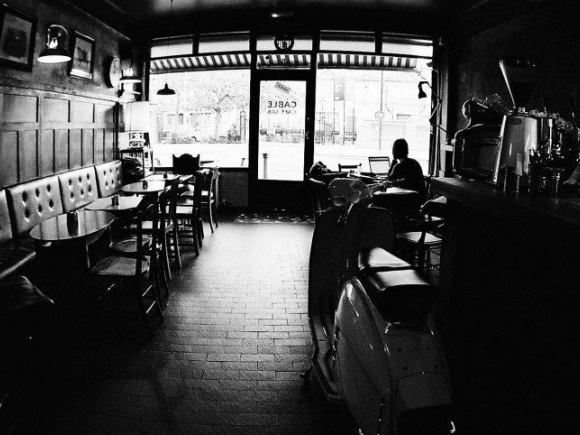
Cable Cafe and Bar. London, you pass.

Jerry: I didn't realise how strongly I'd missed being in a 'real' city until we got off the train at King's Cross. More specifically, when we went down to the underground at King's Cross. The trams in Sheffield are cute and terribly civilised and all, with their live conductors making eye contact and taking payment in  person after you've already boarded, but really, it just feels so much more right to finally be loading up a pre-paid swipeable card that registers through the outer layer of your wallet and shoving with 9 million other anonymous people into a steel tube. Comeplete with tinned voice announcing the next stop. I know it's counter-intutive, but I felt like claustrophobia was finally lifting off my chest and I could breathe again. In a packed subway car. Agoraphobia, I guess? I have suburban  agrophobia. Not enough people. Something creepy might happen. London underground at 4pm on a weekday for me anytime. Oh god. So much better.

Ah, the sweet smell of freedom and armpit.

Laura: For the first couple of days we stayed at this really beautiful place we found on couchsurfing. It was Bexley, in zone 5, sort of out in the suburbs, about as far as you could get while still being technically in a London borough. But even then, there was definitely a feeling of comfort that maybe came just from the fact we were a few blocks from the train. Those first couple nights we barely even left the house. We were in this major metropolis, which I had never been in before, and we spent the whole weekend inside drinking, writing, and watching documentaries about ancient Rome. But my love for cities isn't really about nightlife or culture or  anything. It's mainly what Jerry said: agorophobia. I can breath much easier in cities. I've read that's kind of an American thing. How all our horror stories take  place in the wilderness or the suburbs. Places where no one will hear your scream.

Why would we go out when we can drink this in? UK is awarded 10 points for booze.


Jerry: It was just as well - as two people who've worked in bars extensively, we were glad to be off the main drag on Saturday night. We hiked around Footscray Meadows, a beautiful nature reserve, on Sunday, then headed in on Monday. Our second couchsurfing destination was in Lambeth, zone 2, right off Oval station, with an awesome  woman named Sarah and her super chill cat. She gave us a great walking route of the major zone 1 sights and we wandered past all the obligatory stops: Westminster and parliment, Soho and West end, and made it to the British Museum.

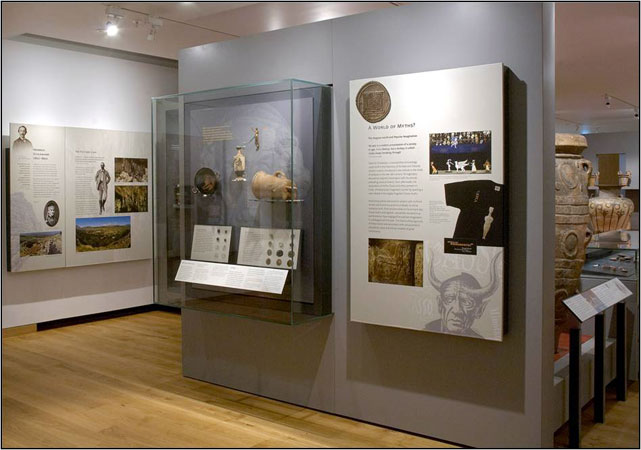
Laura: The British Museum was pretty amazing. We're both obviously huge history buffs. I wanted to be an archeologist all the way into high shcool, so I'd been wanting  to visit the British Museum since I was a little kid. I had to see the Rosetta Stone, but it's basically the Mona Lisa of the British Museum: always surrounded by a huge crowd, and considerably less inpressive than tons of other things they had there that no one was giving a passing glance. The British Museum is essentially to archeology what the Louvre is to art. We had to go two days in a row, and even then we only saw what we would consider the bare minimum.

Can we move here? Like, to the museum itself.


Jerry: As Laura aptly put it: the British are REALLY good at showing up places and taking things. If a civilisation was ever awesome and ever made anything, some fragments ended up there. Our words can't do the collection justice: go there yourselves, and set aside at least a week to really see it. Other than that, in our  wanderings (about 10 miles each day without noticing until we realised we were exhausted at night) we poked our head in at the recounstructed Globe and saw some street performers in Southwark, wandered through West End wishing we had the funds to see anything (we'll have to come back) discovered Chinatown (and took a picture of rapeseed oil for Nicole) and finally indulged Laura's curiosity about steak and kidney pie. Dude, I had no idea the British took their pie so seriously.

Venison, bacon, and red wine? Steak and stilton? Goat cheese and sweet potato?
YES WE WILL HAVE THEM ALL

Laura: I can now say that I've had steak and kidney pie in London. It was pretty solid. In retrospect, I can see why I should have eaten it with a pint. It's fantastic drunk food. If you're in London, get a pieminster pie. They're serious. Also, there's an entire area in London filled with used bookstores (not disimilar from Calle Donceles in Mexico City, but with more books in English). We found one place that had a used bookstore right next door to a specialty whiksy shop. If I do ever move to London, I will give someone all my money to install me in a  broom closet so long as it's walking distance to that location.

Or here. We could also live right here.

Jerry: Did you know that bitters are shockingly hard to find in the UK? The specialty whisky shop had a decent selection, but only because it was specialty, and nowhere else we'd bought booze did. Cocktails are not a thing. We shall make no Sazeracs here to go with our chicken and waffles. However, the chicken itself did seem to pass the test with yet another host (who confirmed the pattern that chicken coated in crushed crisps is the very funny idea to Brits) and continues to be our passport to the world.

Laura: In short: London seems cool. We may return.

Jerry: Post script for Nicole:


Sunday, September 21, 2014

Yorkshire: proper brews and barred schools of magic

Jerry: We hopped a train over to Yorkshire on Monday, where we spent the week in Sheffield as guests of another writer friend, Catherine de Mornay

Some rivalries never die.

Jerry: I know far more English history than I do about modern England, so that picture is funny to me. Despite the fact that I'm perfectly used to municipal seals on public property, it's still surreal to see red and white roses stamped on things as mundane as dumpsters.

Laura: Pay note to Yorkshire Tea's slogan:

"Let's have a proper brew." 

Laura: This is, without doubt, the most British thing to ever happen. Besides this police box:

This is a real thing. It exists. And it is in Sheffield.

Jerry: Catherine lives on the outskirts of Sheffield, at Meadowhall. We took the tram into city centre and spent one afternoon wandering around. The Festival of the Mind was just starting, and although we sadly only caught one day of it (if we'd known we would have planned differently!) there was a cool exhibit at the Winter Gardens and we got to check out the Millenium Gallery. We spent a couple hours poring over the metalwork collection in particular. Sheffield has a long history in metalworking (from being the definitive source of renaissance cutlery to being a major steelworks in WWII) and you know how I get when history meets art.

Laura: Jerry is such a history nerd. I'm pretty sure I've never seen someone so giddy about a collection of spoons before.

Jerry: Actually, I think the coolest thing was the châtelaine. I didn't even know those existed until now. The word means both a woman in charge of a large household (masculine: châtelain, the french equivilant of "castellan") and refers to the device that holds her keys and everything else she might need. It's like your faire belt, except small and elegant and orderly. It's illuminating to be reminded of which items used to included in the same "bare minimum necessity" category as "wallet, cell phone, keys" today, such as the household seal. And that well-made scissors were costly enough to be kept strictly on the the lady's person.


Fabric scissors  are STILL a closely-guarded asset.

Laura: My favorite part of the week was discovering England's array of premixed cocktails. Premixed cocktails are generally really depressing. But since public drunkeness is such a thing here, they need ways to discreetly and portably get through their daily commute. Thus, our discovery of cans of Pimms, traditional or with elderflower and blackberries, premixed with lemonade. There were also precanned gin and tonics with cucumber. England knows the way to my heart. 

Pimm's: drinking in the park like a CLASSY hobo.

Jerry: We did spend some of our time in parks not drinking. Catherine lives almost at the top of Wincobank hill, just below an iron age fort. This has taught me two things. One: archeological ruins are way easier to find in documentaries, where they highlight and explain them with CGI. Two: Hills are some kind of goddamn Sisypheun torture device.

Laura: Even by my standards it was pretty torturous. And if there's one thing San Francisco toughens, it's your calf muscles. 

Between this view and those houses: THIRTY MINUTES OF DEATH.

Jerry: Other than that, it was a fairly quiet week of catching up on writing. We had some great face-to-face brainstorming with Catherine, who'd just come back from a writer's confrence full of ideas. Happily Ever After has a whole new list of changes now, and we fleshed out a whole magic system and creation myth for her world.

Laura: They were both very productive. I spent most of the time reading crime-fiction and watching the first episode of American Horror Story (by the way: that show gets better right? I'm not the only one who watched the first episode and thought it was completly ridiculous, am I?)

Jerry: And Catherine's six-year-old daughter, Elle, made us bracelets, which we are both totally still wearing.


Friday we went on to London. Next installment coming soon!


Wednesday, September 17, 2014

Lancashire pt 2: car boot sales and a medieval pub

Jerry: Last Sunday, our last day in Burscough, Dawn and Paul took us to a car boot sale.

Yes, there's something going on here other than milling around in a parking lot.

Jerry: For those who are not familiar, it's like a yard sale, except all together. Everyone drives their stuff to the same spot, pays for a merchant stall, and sets up outside the boot (American: trunk) of their car. The end result is kind of like an outdoor thrift store. There's also some professional full-time mobile retailers, the way you can have professional ebay sellers alongside casual people just clearing out the attic. I dont know why we don't have these in America. It's brilliant.

Laura:  For you Californians: it's a swapmeet, which apparently aren't things in Chicago. It makes sense, considering there's pretty much no point of the year in Chicago where you want to be standing around outside all day. I got the scotch tasting set for ten Euros at one in Ireland. I looked it up and it was going for about nintey euros on ebay. On ebay. Not even regular retail. So I flew half-way across the world, and in two months I've now gone to two swapmeets (not at all disimilar to the Santee swapmeet). Apparently this is what I do now. I'm the international swapmeet expert.... I'm cool with that.   

Jerry: After lunch and tasting some lovely local cheeses, Paul took us to try some local cask ales at the oldest pub in Lancashire, which dates from 1320 and is a Grade II listed building. For a little perspective, that's during the reign of Edward II.


Laura: It was here that Paul introduced us to bitter + brown and brown + mild. You order half a pint of either an English Bitter or an English Mild  and then you fill the second half of the pint with a bottle of Mann's brown ale. The point of this lab experiment? Apparently this is the "old man drink" in England (along the lines of pulque in Mexico). That kind of disgusting drink that only the old-timers in the shady corner of the dive can still throw back. I've now decided my goal is to find the OMD of every country I go to. We shall record my findings here, so that these beautifully nasty lab-experiments can be saved for posterity. And then I can open a hipster bar.  

Jerry: It wasn't disgusting.

Laura: Well, not to us, but we both voluntarily drink Malort. I suppose the barometer I'm measuring the "old man drink" by is this: if it's presented to you by a gruff, blue-collar old timer with an expectant look on his face like he's sure these young fancy-pants are about to do a spit-take.

This is not a Malort Face.

Jerry: That's a fun thing we're discovering about the culture in the north of England. It's nothing like Americans picture all things British. There's an economic (and resultingly, political) divide between the north and south of England that has been well-documented by people much more educated than we are. I'll therefore stick to the people-level observations that writers and actors are good at: Everyone in Lancashire is of pointedly simple tastes and extremely friendly and hospitable. Everything midwesterners hate about New York, northerners hate about London. Taking us to try local cask ales was the first Paul had realised all the pubs around him do tasting flights, and even that pushed the limits of "posh" for him.


"It's a fair enough idea, if you like that sort of thing."

Laura: To quote Paul: "I don't do posh." That line could basically sum up Lancashire (in a good way). They seem predominently anti-bullshit in the north. I kept thinking my dad and Paul would probably get along great.   

Jerry: We rounded out the day with a lovely traditional Sunday roast made by Dawn's mother, and playing with their parrot. Paul finally forgave us our mutual background working in posh bars when we taught him our whiskey class trick of lighting citrus peels on fire


Fortunately, liking fire trancends class politics.

We left for Sheffield Monday morning, which we'll post about next week. Thanks Dawn and Paul Chapman for an excellent week's stay in Burscough!